


Managed Python Dependencies - No More pip Errors or Version Conflicts
No more version conflicts, broken environments, or "works on my machine" problems. Get shared, reproducible Python environments that just work—for everyone, every time.
Get Startedin the Dataflow app
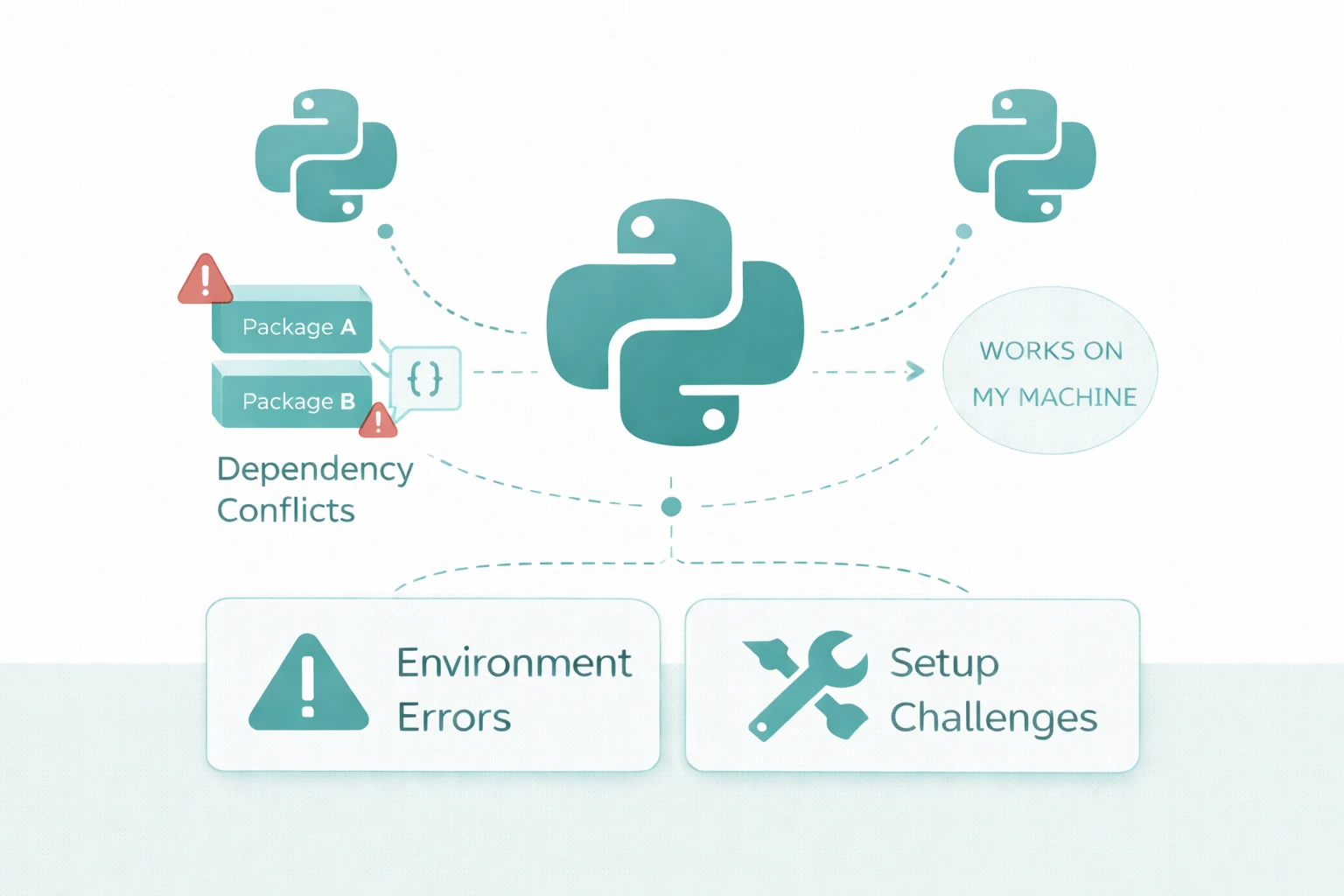
Why pip install keeps failing and what Dataflow does instead
Local dependency workflows break because each machine resolves packages differently and teams mix ad-hoc fixes over time. Dataflow replaces this with containerized, immutable environments that are built once and reused across Jupyter, Airflow, and deployed apps. Every run uses the same locked environment, so version conflicts and works-on-my-machine issues stop blocking delivery.
| Tool | Reproducibility | Team sharing | Cloud support | Setup time |
|---|---|---|---|---|
| conda | Moderate; can drift between channels and OS builds. | Manual export/import of environment files. | Works in cloud VMs; extra setup in managed runtimes. | Medium |
| venv + pip | Low to moderate; lock files are often incomplete. | Depends on developers reproducing local steps. | Common but fragile across notebook, scheduler, and app runtimes. | Medium |
| Docker | High when images are pinned and rebuilt consistently. | Strong via registries, but requires Docker workflow knowledge. | Strong across cloud providers and orchestrators. | High |
| Dataflow | High with immutable, shared environment snapshots. | Built-in team sharing across workspace and deployed workloads. | Designed for managed cloud and sovereign cloud deployments. | Low |
Dependency Hell Is Real
If you've ever spent hours debugging version conflicts, rewriting requirements.txt, or rebuilding virtual environments from scratch, you know the pain. Python's dependency ecosystem is powerful, but fragile.

Version Conflicts
Package A needs pandas 1.5, Package B needs pandas 2.0. Pick one and something breaks.

"Works on My Machine"
Your local setup is different from staging, which is different from production. Good luck debugging.

Environment Drift
Over time, your local environment diverges from the team's. Reproducibility becomes a guessing game.

Manual Maintenance
Managing multiple virtual environments, conda envs, or Docker images across projects is tedious and error-prone.
Shared Python Environments That Just Work
Dataflow manages dependencies for you. Define your requirements once, and the platform builds an immutable, containerized environment that every team member—and every application—uses.
Get Startedin the Dataflow app 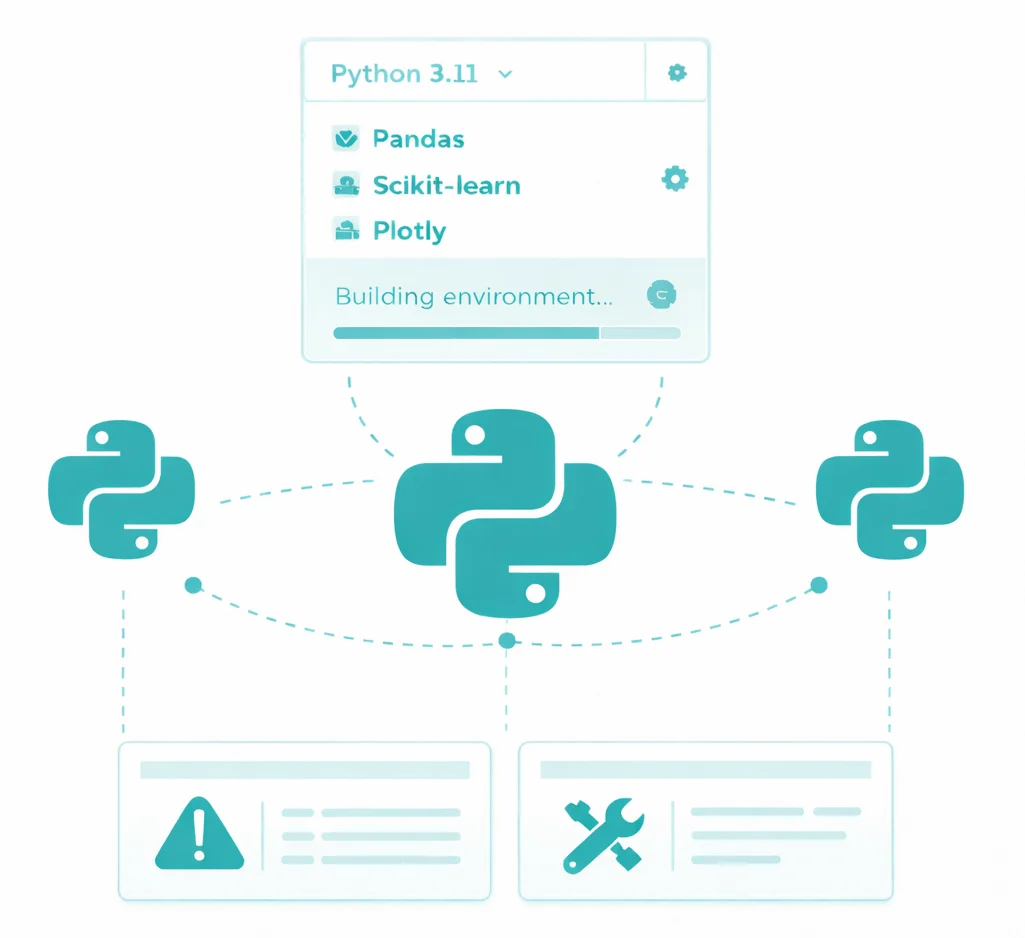
How It Works
Dataflow automates the entire dependency management process, from resolution to deployment.
Define Requirements
Specify your Python version and packages. No need to manually resolve dependencies.
Automatic Resolution
Dataflow resolves the full dependency tree, checking PyPI for compatible versions and detecting conflicts before build.
Immutable Build
Once built, the environment is locked and containerized. Every user and application gets the exact same binary.
Instant Activation
The environment is available across your entire workspace—VS Code, Jupyter, Airflow, and all deployed apps.
Why Managed Dependencies Matter
Stop wasting time on environment setup. Focus on building data pipelines and applications instead.

Zero Local Setup
No virtualenv, no conda, no Docker. Everything runs in the cloud with zero configuration.

Version Rollback
Broke your environment? Roll back to the last working build instantly. Every environment snapshot is versioned and stored.

Production Parity
The environment you use in development is the exact same one running in production. No surprises.

Team Consistency
Everyone on the team uses the same environment automatically. No more onboarding delays or broken local setups.

Project Isolation
Each project gets its own isolated environment. Work on Python 3.9 and 3.12 projects side-by-side without conflicts.

Security & Compliance
Dependencies are locked to specific hashes from PyPI. You know exactly what's running and can audit every package.