

Dataflow Logo
Dataflow Logo
Abstract dataflow background pattern

Deploy Apps to Production

Move from development to production seamlessly. No environment drift, no missing dependencies, no surprises.

Get Startedin the Dataflow appArrow icon
Deploy Apps to Production
1

Deploy Jupyter notebooks to production

  • Publish notebook logic as production workloads without rebuilding your environment.
  • Use the same dependencies and secrets from development to avoid release-time regressions.
  • Schedule and monitor notebook runs with operational controls your team can share.
2

Deploy Streamlit and Dash apps

  • Ship interactive apps with one click and secure URLs for internal or customer access.
  • Keep app runtimes aligned with shared team environments to reduce breakage between contributors.
  • Scale application compute based on demand instead of hand-managing container infrastructure.
3

Turn notebooks into live APIs

  • Expose validated notebook workflows as live API endpoints for product and analytics use cases.
  • Version API deployments using immutable environments so rollbacks stay predictable.
  • Connect APIs to pipeline schedules and shared credentials without writing custom glue services.

Dataflow is a practical Streamlit Cloud alternative for teams that need shared environments, native Airflow integration, and sovereign cloud deployment options. These capabilities let you move from prototype to production with fewer platform gaps across engineering, analytics, and compliance.

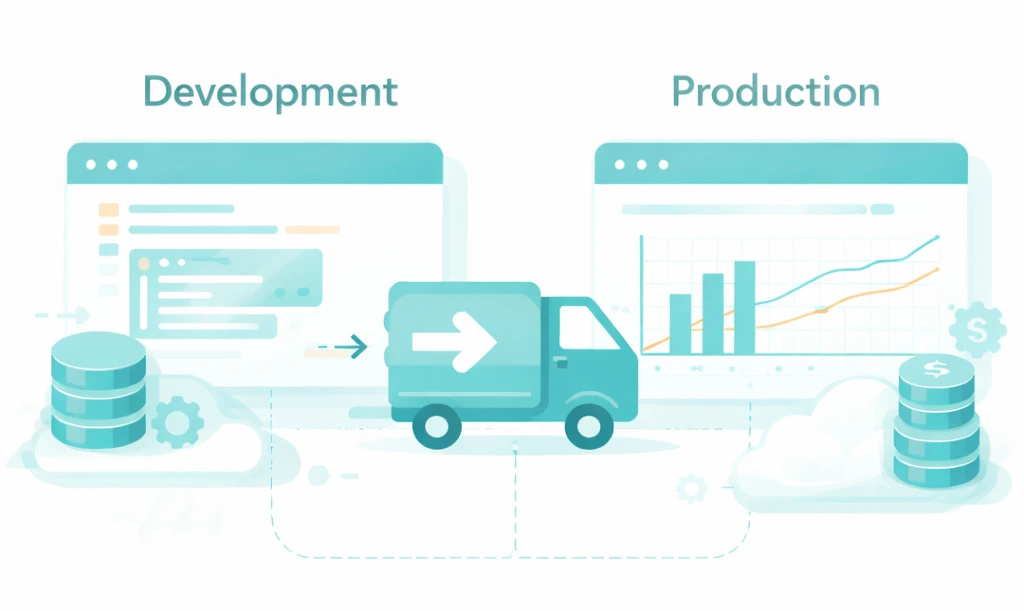
From Development to Production, Instantly

Deploying applications shouldn't require rebuilding environments, rewriting configurations, or debugging version mismatches. With Dataflow, what you develop is exactly what runs in production.

Deploy an AppArrow icon
One-Click Deployment

One-Click Deployment

Push your application to production with a single click. No manual steps, no deployment scripts.

Instant Sharing

Instant Sharing

Once deployed, share applications with your team or customers instantly via a secure URL.

Zero Environment Drift

Zero Environment Drift

The environment you used in development is the exact same one running in production. Byte-for-byte identical.

Auto-Scaling

Auto-Scaling

Production apps automatically scale based on demand. No manual capacity planning required.

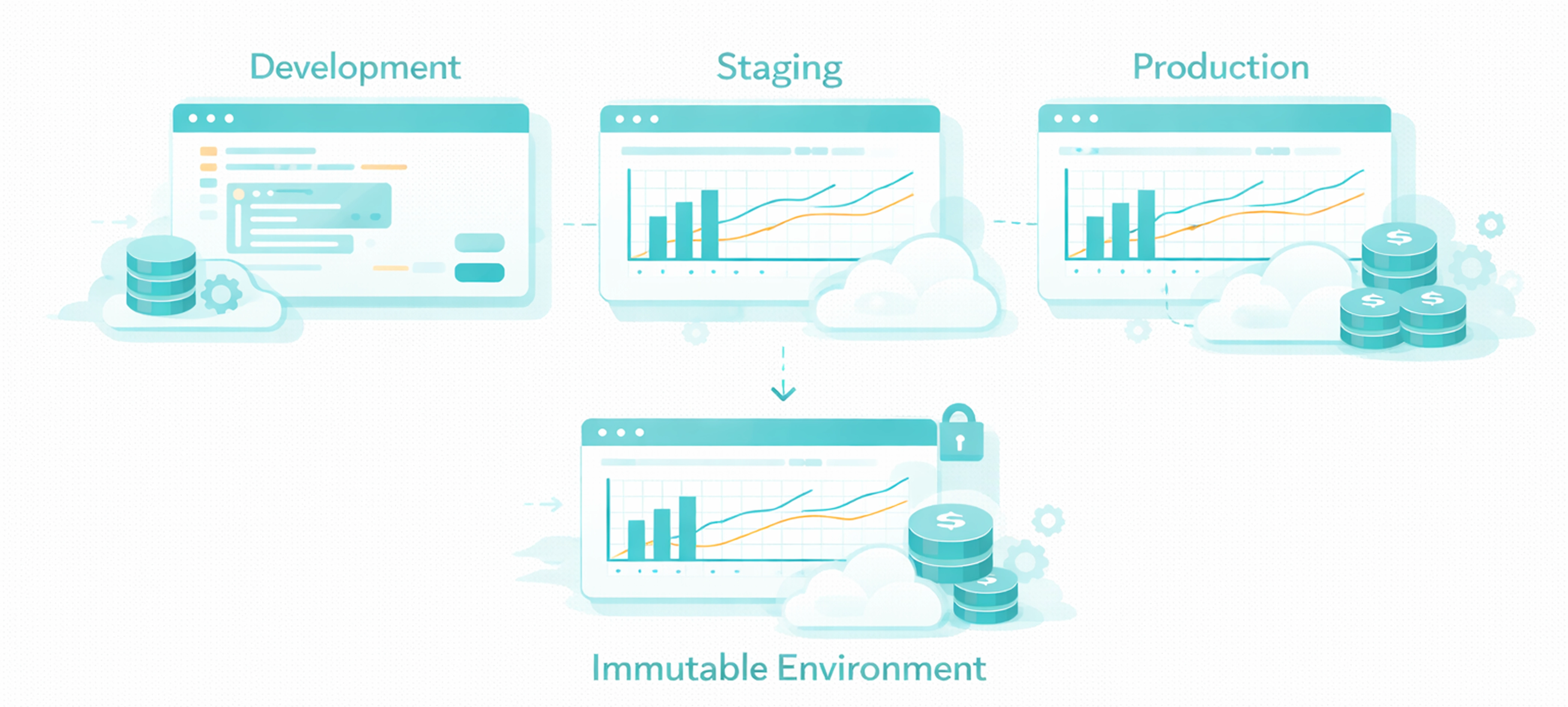
Production Parity by Design

Traditional workflows have separate environments for development, staging, and production. This creates drift, bugs, and debugging nightmares. Dataflow eliminates that by using the same immutable environment everywhere.

Production Parity by Design illustration

Traditional Deployment vs. Dataflow

Traditional Deployment

Dataflow

Rebuild Environments:

Build separate Docker images for dev and production. Hope dependencies match.

Same Environment:

Development environment is the production environment. Zero rebuild required.

Manually Configure Secrets:

Set environment variables in Kubernetes, update .env files, manage AWS Secrets Manager.

Auto-Configured:

Secrets are centrally managed and automatically injected into production apps.

Write Deployment Scripts:

CI/CD YAML files, Terraform configs, and custom deployment scripts.

One-Click Deploy:

Click deploy. Dataflow handles the rest.

Manual Scaling:

Set up load balancers, configure autoscaling groups, monitor capacity.

Auto-Scaling:

Apps automatically scale based on traffic. No configuration needed.

Secrets and Connections, Managed Automatically

In traditional deployments, you have to manually configure production credentials, update environment variables, and ensure secrets don't leak into logs. Dataflow handles this for you.

Environment-Specific Secrets

Environment-Specific Secrets

Define separate credentials for dev, staging, and production. Apps automatically use the correct ones based on environment.

Secure by Default

Secure by Default

Production secrets are encrypted at rest and in transit. Never exposed in code or logs.

Audit Logs

Audit Logs

Full audit trail of who accessed which secret and when. Built for compliance.

No Manual Configuration

No Manual Configuration

Secrets configured in the platform are automatically available to deployed applications. No .env files to manage.

Pair this with Shared Foundation and Managed Dependencies, compare rollout options on Pricing, or Book a Demo for a production-readiness review.